


Children’s Outdoor Bill of Rights Aims to Reconnect Rochester Youth With Nature and the Night Sky

Rochester has moved forward with an ambitious effort to ensure that every child has regular access to nature, not only in parks and playgrounds, but under open skies, at dusk, and deep into the night.
At the center of this work is the Children’s Outdoor Bill of Rights, a framework developed through a broad network of community partners. The initiative is closely aligned with the national movement led by the Children & Nature Network and the influential work of author Richard Louv, whose book Last Child in the Woods helped spark a national conversation about children’s growing disconnection from the natural world.
Louv’s central question continues to resonate: what happens to children when time outdoors disappears?
Rochester’s response has been to join the Nature Everywhere initiative, a national effort aimed at embedding nature access into the daily lives of children across cities. Rochester joins other participating communities across the country working to normalize outdoor experiences as a core part of childhood development.
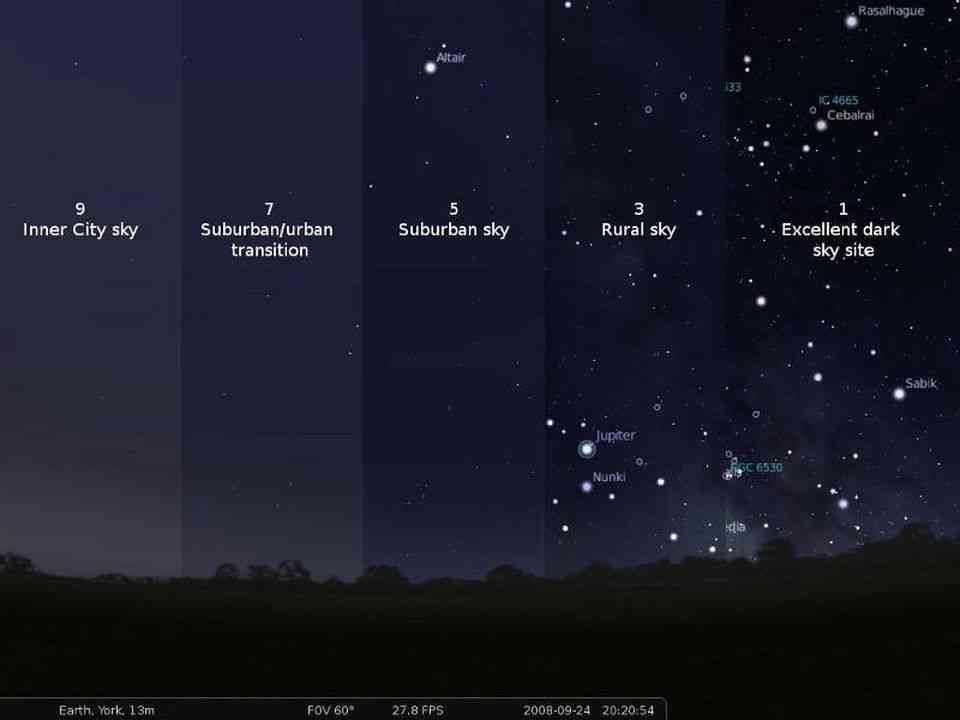
Among the rights outlined in Rochester’s framework is one that stands out for its simplicity and depth: the right of children to experience the night sky.
“We want young people to be able to see the stars and connect with the wonder of the universe,” said Kyra Stevenson, who is helping guide the initiative’s next phase of development and will soon lead Helmer Nature Center.
From Vision to Practice
While the Children’s Outdoor Bill of Rights provides a guiding vision, Stevenson emphasized that implementation is where the real work begins.
“Just because something is written on paper does not mean it happens,” she said.
Rochester’s effort now involves a growing coalition of roughly 40,000 school-aged children across public, charter, parochial, and homeschool settings. Partners from education, conservation, and community organizations meet quarterly to coordinate programming and expand access.
Local astronomy clubs have already begun partnering with schools and community groups, bringing telescopes into neighborhoods and introducing students to the night sky firsthand.
Still, Stevenson said the initiative remains in its early stages.
“We are really at the beginning of this,” she said.
A key focus moving forward is awareness, ensuring families know these opportunities exist, especially as new facilities such as the future Maplewood Nature Center come online.
Nature After Dark
Stevenson believes one of the most overlooked dimensions of environmental education is simply the nighttime experience.
“If you should be able to enjoy nature during the day, you should be able to enjoy nature at night,” she said.
That includes astronomy programming, evening gatherings, and opportunities for families to experience the outdoors after sunset.
She also pointed to initiatives like “Lights Out for Birds,” which asks residents and institutions to reduce nighttime lighting during migration seasons to protect birds navigating the night sky. But she noted that participation is not equally accessible.
“If you’re in an apartment building, what exactly can you turn off?” she asked.
The challenge, she said, is ensuring that dark-sky experiences are not limited to those with transportation, financial flexibility, or rural access.
Rediscovering Wonder
Beyond conservation and programming, Stevenson sees something more foundational at stake, the preservation of curiosity itself.
“When I think back to when I was a kid, I watched space flights. I looked at the moon and stars and asked, ‘What if?’” she said. “I think we’ve fallen short of giving kids those opportunities.”
She recalls a formative childhood experience during the 1980s, when Halley’s Comet passed near Earth. A fourth-grade teacher organized a nighttime school viewing with telescopes, transforming a routine science lesson into something unforgettable.
“That was the hook for me,” she said. “That got me interested in science and space exploration.”
The experience shaped how she understood possibility itself.
The Sky as Shared Experience
That sense of wonder has followed her into adulthood and parenting. She recalls watching Saturn through a telescope at a planetarium and sharing similar moments with her own children. Her son later developed a passion for astrophotography, often setting up telescopes to capture celestial events.
Meteor showers, northern lights, and long nights spent waiting on beaches under open skies remain among her most vivid memories.
“If you have access to the night sky, it connects you to other people and to the universe,” she said.
Those moments often create unexpected community. Strangers gather, conversations begin, and shared awe becomes a common language.
Scale, Perspective, and Belonging
For Stevenson, dark skies are not only about astronomy, they are also about perspective.
She wonders whether children today still see themselves as participants in discovery.
“Do kids see themselves as people who can make astronomical discoveries?” she asked. “Are they curious enough to drive that work forward?”
She recalls taking her daughter into the mountains of Colorado, far from urban light pollution. When night fell, her daughter became disoriented, unable to distinguish where land ended and sky began.
“She couldn’t tell where the mountains started and ended,” Stevenson said.
The moment left a lasting impression.
“Whoa. This is part of something massive.”
For Stevenson, that experience captured something essential about dark skies, not just scientific learning, but humility and scale.
“We are a speck of dust,” she reflected. “Sometimes the weight of the world feels smaller when you’re confronted with something so much larger.”
Access and Equity in Nature
While advocates often encourage travel to rural areas for optimal stargazing, Stevenson emphasized that access remains uneven.
Suggestions to drive long distances for dark skies are not realistic for many families, especially those facing transportation barriers, work schedules, or safety concerns.
She pointed to local alternatives, including programs at the planetarium, Saturday night astronomy events, amateur astronomy groups, and regional parks such as Mendon Ponds Park and Hamlin Beach, as well as dark-sky-adjacent areas near Canadice and Hemlock Lakes.
Still, she returns to a central question: how do families without cars, resources, or familiarity with these spaces participate?
That question continues to shape the initiative’s direction, toward bringing astronomy and nature programming directly into neighborhoods and community spaces.
Building a Regional Network
Looking ahead, Stevenson envisions stronger coordination among regional institutions, including nature centers and environmental organizations across Monroe County.
“We need to pool our resources,” she said.
She also highlighted programs such as Cornell University’s binocular donation initiatives, which provide families with tools that can be used for both birdwatching and sky observation, bridging daytime and nighttime exploration.
For Stevenson, the goal is not simply exposure to science, but something deeper and more enduring.
Every child, she believes, deserves access to wonder, curiosity, and the sense that they are part of a larger unfolding universe.
The work underway in Rochester is about more than astronomy or conservation. It is about ensuring that the next generation grows up with the ability to look up and imagine what might be waiting there.


Comments