


Back to the Center: CRCDS Plants New Roots Downtown
- George Cassidy Payne

- Dec 3, 2025
- 7 min read
When a seminary built for contemplation decides its place is no longer above the city but within its noise, movement, and longing, the ground shifts beneath it. After more than a century overlooking Highland Park, Colgate Rochester Crozer Divinity School (CRCDS) has stepped off its hilltop and into the pulse of downtown Rochester.
For a 206-year-old institution, the move to the historic Sibley Triangle Building signals more than a change of address. It signals a shift in moral posture, a renewed readiness to meet the world where it breathes, breaks, and rebuilds.
“We are excited to open our doors to the public and celebrate this bold new chapter,” said The Reverend Dr. Angela D. Sims, 13th and first woman President of CRCDS and John Price Crozer Professor of Social Ethics. “Our new campus symbolizes not just a move, but a renewed commitment to shaping leaders who will serve with integrity, vision, and compassion.”
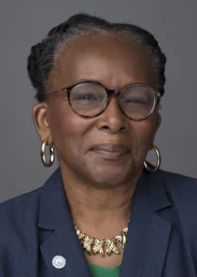
Dr. Sims joined CRCDS on July 1, 2019, bringing a distinguished record of scholarship, teaching, and ministry. Prior to her presidency, she served as Vice President of Institutional Advancement and Robert B. and Kathleen Rogers Professor in Church and Society at Saint Paul School of Theology in Leawood, KS. She holds a Ph.D. in Christian Social Ethics from Union Presbyterian Seminary in Richmond, VA, a Master of Divinity with honors from Howard University School of Divinity, and a baccalaureate degree summa cum laude from Trinity College (Trinity Washington University).
Her research focuses on faith, race, and violence, particularly the ethical legacies and contemporary implications of lynching in the United States. She is principal investigator for the oral history project Remembering Lynching: Strategies of Resistance and Visions of Justice, supported by the Ford Foundation, the Womanist Scholars Program, the Louisville Institute, and other institutions. She is the author of Lynched: The Power of Memory in a Culture of Terror and Ethical Complications of Lynching: Ida B. Wells’s Interrogation of American Terror, co-editor of Walking through the Valley: Womanist Explorations in the Spirit of Katie Geneva Cannon and Womanist Theological Ethics: A Reader, and lead author of Religio-Political Narratives in the United States: From Martin Luther King, Jr. through Jeremiah Wright. An ordained Baptist clergywoman, Dr. Sims actively engages both faith communities and academic circles, committed to the prophetic imperative to “do justice, love mercy, and walk humbly with God.”
A feasibility study sparked the decision to move, but a deeper question propelled it: Where must a seminary stand to prepare leaders for the next decade of challenge and change? The answer guided CRCDS from the quiet beauty of South Goodman Street to a city center being reshaped by reinvestment, imagination, and a determination to reclaim its civic heart.
A Legacy Rooted in Black Church Leadership
For readers of The Minority Reporter, the story of CRCDS rises from soil long enriched by the Black Church tradition. Long before Black Church Studies became a formal discipline, the seminary’s predecessor institutions were shaping leaders who would define Black religious thought, educational access, and civic life across the 19th and 20th centuries.
Among its earliest exemplars is Joanna P. Moore (1832–1916), a Baptist missionary devoted to serving freed African Americans in the Reconstruction-era South. Moore, a graduate of the Baptist Missionary Training School in Chicago, dedicated her life to education, pastoral care, and the uplift of Black communities emerging from slavery, a principle that continues to guide CRCDS today: faith must move beyond the sanctuary into neighborhoods, schools, and lives in need.
Later alumni carried forward this ethos. Mordecai Wyatt Johnson, the first Black president of Howard University, transformed Black higher education through leadership forged in this theological tradition. Howard Thurman, the mystic and social visionary, grounded in contemplation and justice, inspired a generation, including a young minister named Martin Luther King Jr., to imagine faith as a force for societal transformation.
Persuaded by student advocacy and protest throughout 1968 and 1969, led notably by the school’s Black Student Caucus, Colgate Rochester Divinity School took decisive steps to integrate this legacy into its academic life. The school hired more African-American professors, expanded courses in African-American religious and cultural studies, and formally established the Martin Luther King Jr. Program of Black Church Studies in 1969. It was among the first such programs at a predominantly white seminary in the U.S., creating a dedicated space for scholarship, leadership, and justice rooted in Black religious experience.
That lineage deepened when Crozer Theological Seminary, where King studied from 1948 to 1951, merged with Colgate Rochester. King chose Crozer because it dared to be broad in mind and bold in spirit. There he honed his moral philosophy, deepened his commitment to the social gospel and Gandhian nonviolence, and emerged as valedictorian, praised as “one of our most outstanding students.”
Wyatt Tee Walker, civil rights strategist and former dean at CRCDS, carried this tradition into action during the 1960s, demonstrating that moral leadership requires presence, discipline, and proximity to the people one serves.
Samuel Berry McKinney (1926–2018), pastor of Seattle’s Mount Zion Baptist Church for four decades and civil rights leader, exemplified this ethos, marching from Selma to Montgomery in 1965 and serving on the Seattle Human Rights Commission.
James Alexander Forbes, Jr., Senior Minister Emeritus of New York City’s Riverside Church, demonstrated that progressive theology and justice-centered leadership can guide diverse communities, serving as the first African American minister of this interdenominational, multicultural congregation for 18 years.
Today, CRCDS carries this history not as nostalgia but as mandate. Relocating to the Sibley Triangle is a continuation of that legacy: a seminary choosing to stand where the people stand, listen where the city speaks, and teach where justice and compassion are urgently required.
Formation for a Changing World
Alumna Pamela Dayton understands the emotion surrounding the relocation. She cherished the serenity of the former campus.
“I loved every moment I spent at the South Goodman location,” she recalled. “There is no doubt the building is everything my seminary colleagues and professors describe it to be.”
But she also knows the Church, and its seminaries, have changed.
“If there is one thing Church Folk learned during the pandemic, it’s that the Church (and Divinity School) are not buildings, they are people,” she said. “Jesus didn’t tell us to cling tightly to buildings or locations.”
The pandemic reshaped graduate education, accelerating digital learning and shifting student expectations. To Dayton, this makes the move an opportunity rather than a loss.
“The divinity school doesn’t need an awe-inspiring building to do its work,” she said. “And students benefit from significantly lower tuition that doesn’t include massive upkeep.”
A Voice from the Board: Rev. Michael Ford on Why the Move Matters
For Rev. Michael Ford—alum, board member, and Rochester pastor—the move is not merely logistical. It is theological.
“Our move downtown is a reflection of our commitment to Rochester,” he said. “We have a history of being a seminary on the move. Coming down from the hill matters. Leaders need to be where the action is, beyond the fence, in the place where people live and struggle and dream.”
Ford believes the relocation places CRCDS within the city’s civic conversation as an active participant.
“The need for visibility is real. People might have known it existed, but they didn’t always know what happened there. By relocating downtown, CRCDS is going to the people instead of asking people to come to it.”
Incarnation in Real Time
Rev. Dr. Marco McNeil, alum, sees the move as an act of courage:
“CRCDS has always believed that ministry belongs in the heart of the people. By planting itself downtown, the seminary is taking its own gospel seriously.”
For McNeil, this is incarnation, not metaphor but practice.
“It reminds us that faith is not formed in isolation but through listening to the city’s joys and wounds. It signals that our seminary remains committed to preparing leaders who engage the world as it is.”
The Work Ahead
CRCDS’s Statement of Inclusiveness remains central to its identity, rooted in the Gospel conviction that God created all people and the entire world, and grounded in a commitment to full inclusion across race, gender, religion, sexual orientation, ability, and economic background.
In a moment when diversity is under attack nationwide, Rev. Dr. J.J. Warren, Assistant Professor of (Queer) Theology and Program Lead in Gender, Sexuality, and Racial Justice, says the seminary stands as a necessary witness:
“At a time when diversity is demonized, we continue to bear witness to another way, to the truth that only through diversity is the mystery of God and the dignity of all creation experienced in its fullness.”
Drawing on the seminary’s intellectual heritage, Warren invokes the words of famed alum Rev. Dr. Walter Rauschenbusch:
“I am a Baptist, but I am more than a Baptist… All are mine because I am Christ’s.”
As a United Methodist teaching at a historically Baptist institution, one with students from Pentecostal, African Methodist Episcopal, and several other traditions, Warren sees this breadth as its strength.
“We are a community of learning: no matter who you are or how you believe, you will be both affirmed and challenged to be the most responsible steward of your community and tradition(s).”
A Seminary for Rochester, a Seminary for the Future
What distinguishes CRCDS today is not architecture but spirit: intellectual rigor joined with justice-rooted theology, humility paired with transformation.
“If my years at CRCDS were a parable,” McNeil said, “the moral would be this: the gospel becomes real when we live it among real people in real places.”
That story is now unfolding downtown, where the seminary’s long history meets the city’s ongoing struggle and hope, and where future leaders are being shaped for ministries that demand courage, imagination, and compassion.
In the end, the gospel learned at CRCDS has never belonged to a hill or a building. It is alive—alive in the city, alive in the work, alive in the people who carry it forward.




Comments