


Questions That Remain After the Santiago Decision

As reported in a recent MR news story, New York State Education Commissioner Betty Rosa has dismissed a petition seeking the removal of Rochester Board of Education Commissioner Isaiah Santiago. The petition was filed last year by former Board of Education Commissioner James Patterson, who alleged that Santiago called him the N-word several times during an official Board meeting.
According to Commissioner Rosa’s decision, the assertion that Santiago was guilty was based, in part, on two witnesses’ written statements. So we must ask: is Rosa effectively dismissing the credibility of those witnesses?
It would be most interesting if MR and/or other media outlets were to file a FOIL request to determine who those witnesses are. Was either of them a Board member? Was the Rochester City School District’s State Monitor — appointed by Rosa to oversee the affairs of what many have described as a troubled Board — one of the individuals who submitted a written statement?
An early news report on the incident stated that “the Petition includes written statements from the independent State Monitor and Board President Camille Simmons — who say they heard the argument and the racial slur,” with Simmons writing that Patterson was visibly upset and in tears.
If that reporting is accurate, serious questions remain.
And if the Board is functioning effectively, why was it necessary for Rosa to appoint a State Monitor to oversee its affairs? Furthermore, relative to “effective governance,” why would the Board require coaching from the Council of the Great City Schools?
Apparently, Mr. Patterson’s petition was dismissed on procedural grounds. According to the decision, “the hearing officer allowed Santiago to submit an apology as evidence and to file a motion to dismiss the application. Patterson was given an opportunity to respond but did not meet the deadline set by the hearing officer.”
In other words, a missed deadline proved decisive.
Still, many in the community believe Santiago did, in fact, say what Patterson accused him of saying. For those individuals, Rosa’s decision feels like a miscarriage of justice and a troubling precedent.
What message does this send?
If a RCSD student were to refer to a classmate, teacher, administrator, or staff member using the N-word, would a delayed apology alone be sufficient? Would there be no referral, no disciplinary action, no suspension — nothing beyond an apology?
The comparison is not exact in a legal sense, but the ethical implications are worth considering.
Regarding Santiago’s apology, some have described it as incomplete. His statement that his former colleague “believes [he] used an iteration of a word [he] didn’t say” struck many observers as unusual, particularly in light of earlier reporting suggesting he had no intention of apologizing.
It appears that, after consulting with legal counsel, an apology — even one framed generally rather than specifically — was submitted. That apology was then accepted into evidence.
Meanwhile, four Board members — a majority — voted to pay for Santiago’s legal representation, including Board President Simmons. If earlier reporting is accurate and she stated she heard the slur, her vote to authorize public funds for his defense raises ethical questions.
How much did taxpayers ultimately pay? The case stretched on for nearly a year. Transparency demands an answer.
Commissioner Jacqueline Griffin, who voted against the resolution to fund Santiago’s defense, called the use of taxpayer dollars “morally and ethically [and fiscally] irresponsible.” That perspective deserves serious consideration.
More broadly, this episode has exposed deep divisions within the community.
Some have argued that if a white official had used the slur, outrage would have been immediate and overwhelming. Others have defended Santiago and criticized Patterson for pursuing the matter.
Social media commentary, including posts from educators and elected officials, has reflected those divisions. Supporters of Santiago have framed the matter as overblown; supporters of Patterson insist it is a serious issue of accountability.
When young leaders make mistakes — particularly serious ones — many believe it is the responsibility of elders and community leaders to insist on full accountability. Growth and learning, they argue, come from confronting wrongdoing directly and honestly.
If the lesson instead becomes that half-acknowledgments are sufficient, then a very different message is sent.
The Struggle Continues...
~
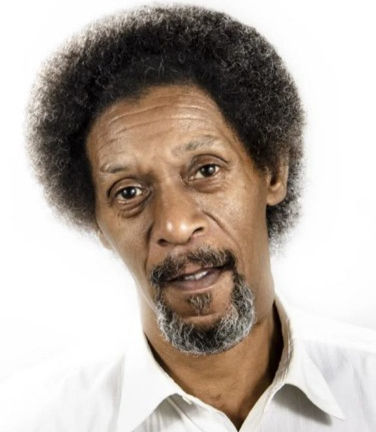
Howard Eagle is a longtime educator and local anti-racism advocate, known for his campaigns for the Rochester school board and prolific political and social commentary. Eagle taught social studies in the RCSD for 23 years, before retiring in 2010, and was an adjunct professor in the Department of African American Studies at SUNY Brockport for 19 years before retiring in 2020.


Comments