


Remembering Dr. David "Sankofa" Anderson, Rochester Historian, Educator and Keeper of History
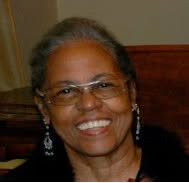
For more than six decades, Dr. David “Sankofa” Anderson worked to ensure that Rochester remembered its history — particularly the Black history that too often had been overlooked, diminished or forgotten.

Anderson, a nationally recognized Frederick Douglass scholar, educator, storyteller, civil rights activist and longtime community advocate, died at age 96. His death prompted tributes across Rochester for a man whose influence stretched from classrooms and community organizations to the national effort to preserve the history of abolition and the African American experience.
Born April 28, 1930, in Cincinnati, Ohio, Anderson moved to Rochester in 1956 to attend Rochester Institute of Technology, where he earned a degree in photography in 1960.
He arrived in a city with a celebrated history of abolitionism but one where Black residents still confronted entrenched discrimination in housing, employment and other areas of daily life.
Anderson experienced that discrimination personally, including difficulty finding housing and being denied professional opportunities despite his qualifications. But rather than simply documenting those conditions, he became part of a generation of Black Rochesterians determined to challenge them.
He worked with Action for a Better Community and later became an associate director at the Urban League of Rochester. There, Anderson helped develop Project Uplift, which connected primarily Black and Puerto Rican teenagers with jobs and experiences designed to prepare them for adulthood and employment.
He later worked with the Rochester City School District’s School Parent Advisors for the Neighborhood, or SPAN, program, emphasizing stronger relationships among schools, parents and neighborhoods.
His community involvement over the decades also included the Rochester School for the Deaf and numerous educational and civic organizations. He taught African American studies at Rochester-area colleges and eventually became a visiting community scholar at Nazareth College, now Nazareth University.
An Early Fight Against Lead Poisoning
One lesser-known chapter of Anderson’s community work involved his early advocacy against childhood lead poisoning.
Long before lead exposure became a major public-policy issue in Rochester, Anderson helped draw attention to the dangers posed by deteriorating lead paint in the city’s aging housing stock. Through his work with young people and community organizations, he helped document conditions confronting children living in poor-quality housing.
Anderson became a founding member of what would become the Coalition to Prevent Lead Poisoning. His advocacy helped frame lead poisoning as more than a medical issue, drawing connections among children’s health, housing conditions, poverty and racial inequality.
That work reflected a philosophy that would define much of his life: History and community activism were not separate pursuits. Understanding the past could provide people with the knowledge needed to confront inequities in the present.
Becoming “Sankofa”
Over time, Anderson became known throughout Rochester simply as “Sankofa.”
The word comes from the Akan tradition of Ghana and is commonly understood as the importance of going back to retrieve knowledge from the past in order to move forward. Few words could have more appropriately described Anderson’s life’s work.
He was a founding member of the Black Storytelling League of Rochester and Akwaaba: The Heritage Associates, using storytelling, historical interpretation and reenactments to bring African American history to audiences far beyond traditional classrooms.
Beginning in the early 1980s, Anderson shared African American history and oral traditions with audiences in at least 25 states and in Ghana.
His storytelling transformed historical figures from names in textbooks into people whose struggles, achievements and lessons remained relevant to contemporary life.
He became particularly renowned for his scholarship and interpretation of Frederick Douglass and for preserving the history of Black soldiers who fought for the Union during the Civil War.
Anderson was a founding member of the United States Colored Troops Living History Association and a senior fellow with the United States Colored Troops Institute for Local History and Family Research. He also helped organize programs examining Douglass’ efforts to challenge policies that initially prevented Black men from serving in the Union Army.
His work eventually earned national recognition. In 2007, Anderson served as a storyteller-in-residence at the Smithsonian Institution’s Folklife Festival in a program exploring the power of African American oral traditions. He also received the National Association of Black Storytellers’ Zora Neale Hurston Award.
Keeping Frederick Douglass’ Rochester Legacy Alive
Perhaps no aspect of Anderson’s historical work was more visible than his decades-long effort to preserve Rochester’s connection to Frederick Douglass.
Anderson chaired the Rochester-Monroe County Freedom Trail Commission and helped establish Rochester as an important destination for understanding the Underground Railroad, abolition and the broader African American freedom struggle.
Central to Anderson’s message was a point that Rochester itself could sometimes overlook: Douglass was not merely a national historical figure who happened to live in Rochester. The city was central to his work and legacy.
Douglass lived in Rochester for roughly a quarter-century, publishing his abolitionist newspaper, delivering speeches and advancing the causes of abolition, citizenship and equality from the city.
Anderson spent decades making sure Rochester understood the significance of that history.
In 2017, U.S. Sen. Charles Schumer appointed Anderson to the federal Frederick Douglass Bicentennial Commission, created to commemorate the 200th anniversary of Douglass’ birth.
That appointment placed Anderson on a national stage while building upon work he had spent much of his life doing locally.
His influence could be seen in Rochester’s 2018 Douglass bicentennial celebration and in subsequent efforts to make the abolitionist’s presence more visible throughout the community.
For Anderson, preserving Douglass’ history was never simply an exercise in nostalgia. The fight for freedom, citizenship, education and equality offered lessons for every new generation.
Teacher, Mentor and Community Scholar
Yet Anderson’s influence cannot be measured solely by commissions, awards or historical projects.
He was also a mentor.
Generations of students, educators, activists, historians and community leaders encountered Anderson through lectures, storytelling programs, college courses and community events.
His approach to African American history emphasized not only oppression and injustice, but achievement, resilience, culture and the agency of Black people themselves.
That philosophy was rooted partly in Anderson’s own family. His parents, who came from Alabama and had limited formal educational opportunities, helped inspire his lifelong commitment to expanding educational opportunity and encouraging adults to continue learning.
In 2017, Schumer publicly recognized Anderson’s role as a civil rights activist, educator and storyteller, highlighting his efforts to improve educational and career opportunities for Rochester’s communities of color.
That same year, Nazareth College renamed its Center for Public History in Anderson’s honor, recognizing his decades of work preserving and teaching African American history.
In 2022, state Sen. Samra Brouk presented Anderson with the New York State Liberty Medal, the state’s highest civilian honor, recognizing his lifetime of public service.
Kenneth B. Morris Jr., a direct descendant of Frederick and Anna Murray Douglass, described Anderson as a “presence and light in Rochester and the world.”
A School Bearing the Anderson Name
Perhaps one of the most enduring tributes to Anderson came from the Rochester City School District.
In 2024, School No. 16 was formally renamed the Dr. David and Ruth Anderson Academy, honoring Anderson alongside his wife, Ruth, a longtime Rochester educator who taught in the district for 23 years and developed educational materials focused on Rochester’s African American history.
The naming ensured that the Anderson legacy would become part of the daily lives of generations of Rochester children.
Following Anderson’s death, the district said his passion for African American history and heritage helped shape how generations of Rochester residents understand their city and its past.
“His legacy will continue to live through the school that proudly bears his and Mrs. Anderson’s names and through our work to educate, inspire, and create opportunities for the young people of Rochester,” the district said.
Rochester City Council President Miguel Meléndez called Anderson a “beacon of excellence” and a tireless advocate for Rochester, particularly its African American community.
Mayor Malik Evans described Anderson as a “legendary figure” whose life’s mission was preserving and transmitting the history of the African diaspora.
Evans also invoked the concept that had become synonymous with Anderson himself: Sankofa — looking backward to recover what has been left behind so society can move forward with greater wisdom.
A Keeper of Rochester’s Memory
Anderson lived long enough to see many of the stories he spent decades fighting to preserve become more firmly embedded in Rochester’s public identity.
Frederick Douglass’ presence is increasingly visible throughout the city. African American history occupies a larger place in Rochester’s understanding of itself. Institutions that once devoted relatively little attention to Black history now preserve archives, sponsor programs and teach stories that Anderson and others insisted deserved recognition.
And his own name is permanently attached to both an academic center devoted to public history and a Rochester public school educating future generations.
But Anderson’s legacy may ultimately be less about the buildings, commissions and honors bearing his name than about the philosophy behind his work.
History, in Anderson’s telling, belonged to ordinary people. It lived in neighborhoods, families, oral traditions and stories passed from one generation to the next.
And African American history was not a side chapter of Rochester’s story. It was essential to understanding Rochester itself.
For more than 60 years, David Anderson helped make certain that story was remembered.
Now Rochester must remember his.


Comments